|
| El Nino playing it coy with a rainbow before a winter storm. |
El Nino has come through these parts big time thrice since I've lived here in the High Mojave Desert of SoCal. In the 80s, I recall heavy rains and a bumper crop of tumbleweed. Living on a hill, the yard began to slide down the cul-de-sac. In the late 90s, it was a real doozy: long and violent seasons with thunderstorms, monsoons and floods. Being a military family, we actually had lived in hurricane locations, and I recognized the storms of the 90s were definitely tropical storms at the very least. I recall coming home one night from grad school--and as we live in a valley, we have a big sky--and the lightning looked like someone was playing ping pong with it. There was so much standing water, we jokingly called them Lake Central and Lake Kiowa, after the streets they engulfed. Then came the wildflowers (the good part of El Nino) and the mold, weeds and rodents (the bad parts of El Nino.) More of the yard slid down the hill.
 |
| Slowly down the run-off. |
 |
| Not a giant gopher--just me. |
But this year El Nino has been helpful. The rains, rather big in November and smaller in December and January, softened up the sand and clay soil that becomes like concrete in the frequent 100-plus degree weather of the summer and autumn. So, I've been digging, and the yard looks like a giant gopher moved in. First, a trench filled with large river rock because the yards to the east of us, up the hill, provide a river bed of rushing water in a big rain. This tactic is working, no torrent going through our yard.
Then, as our yard is a Certified Wildlife Habitat and Butterfly Garden,
 |
| Rich, mulchy 3 year-old berm--notice the mint taking over! |
I've built up natural berms and shelters for birds and bugs and butterflies, using the limbs and branches of our trimmed trees, and mulching the leaves from the fall. I do not live in a gated community with rules about dignified landscaping, so it looks a little wild. But, I must say, our garden community of birds, bugs and worms loves it, and it is both a natural way to provide more soil as it mulches, and prevent further erosion. I have rescued plants (buying them on sale) to provide a line of privacy so we and privacy in our home, and the neighbors don't have to view our wild yard. Unless they want to, then they can visit.
 |
| Filling in the gaps. |
 |
| Iris-functional and lovely. |
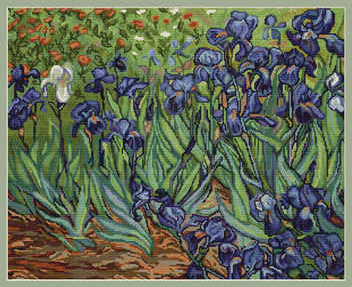
I am slowly filling in the parts of the western part of the yard that have eroded with sandy soil which slid down from the neighbor's yard into the eastern part of our yard. It is going to take a long time, but there is progress. I am also planting drought resistant trees and bulb flowers, like iris. Why iris? Aside from my devotion to Van Gogh? Anyone who has attempted to dig up iris (or daffodils, for that matter) knows they really get entrenched. and are a task to dig up. So, they are also great at stopping erosion--and are so magnificently beautiful. They are already coming up.
 |
| Prelim veg patch. |
There is one section of my yard that adjoins the neighbors, they have a lovely tiered vegetable garden. I've always wanted to duplicate it on my property--now that the soil is softer and I have designated time digging this--that's just what I'm doing! But not as fancy. And there will be less run-off when it rains. Thank you El Nino, for softening up my yard.
 |
| Beginning a berm with roadrunner approval. |
Climate change in general means drought here in Cali. The natural berms, et al, are vibrant, growing parts of the yard that discourage fire. That's the big threat here. I'm considering creating a hugelkultur, meaning hill culture or hill mound
http://www.inspirationgreen.com/hugelkultur.html . That keeps in the moisture. All the garden creatures would love it.
It may seem that Californians are so obnoxious bragging about the warm weather, but too many sunny skies brought the drought that created epic fires over the last several years. Hoping El Nino will change that.